Medical Comparison
The Pinnacle of Medical Education
THEN
THEN
NOW
NOW

The determination created by the eagerness to learn, reflected in the eyes of the participants,
is the only thing that hasn’t changed in 175 years!
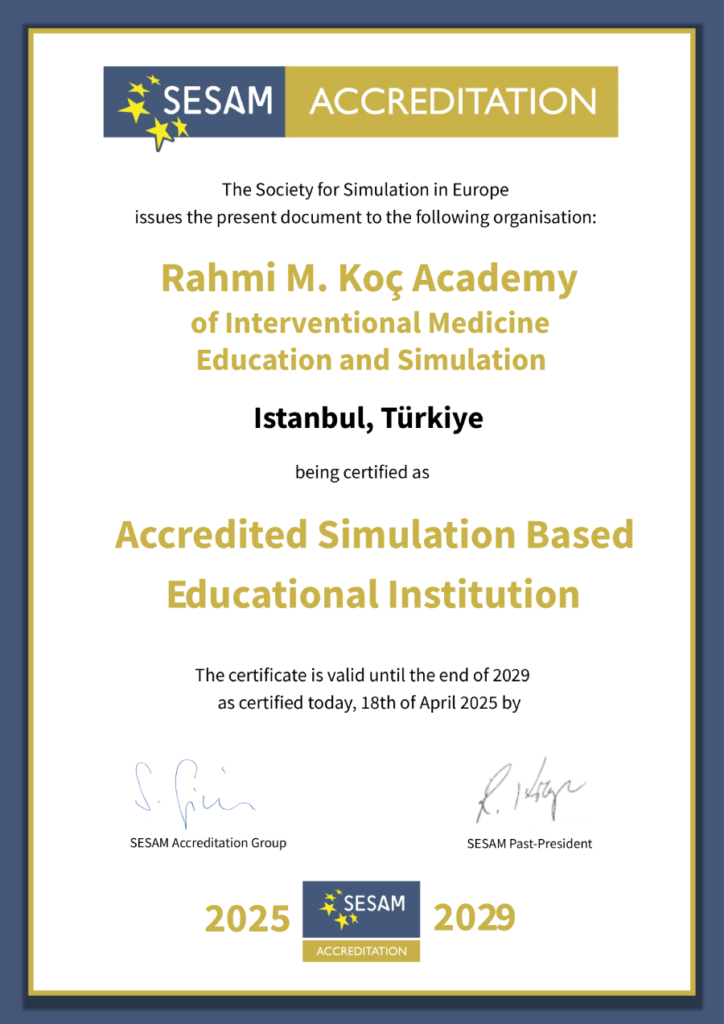
Accreditations

Sesam Accreditation
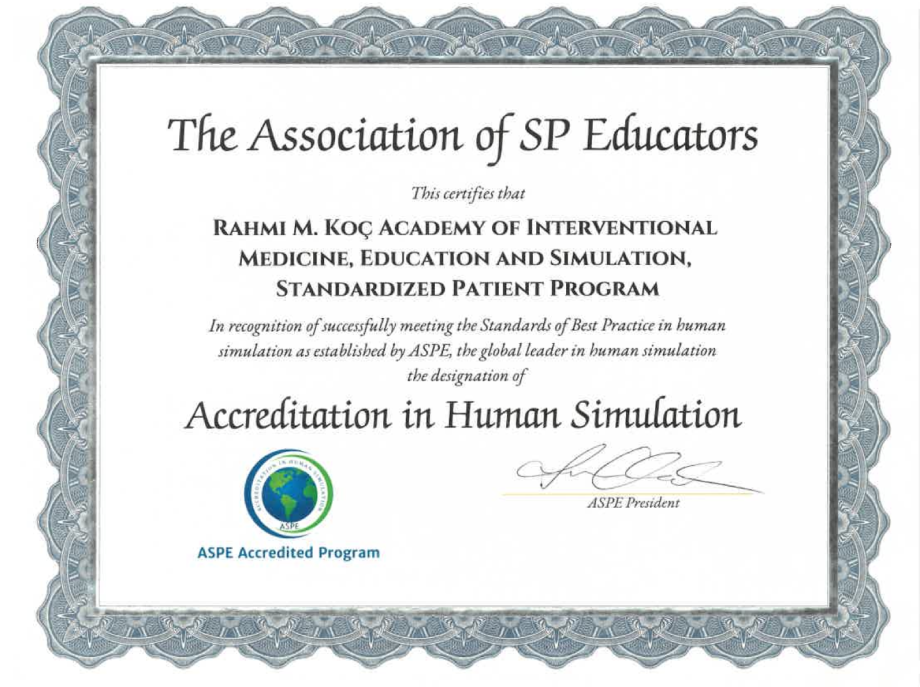
Association of SP Educators
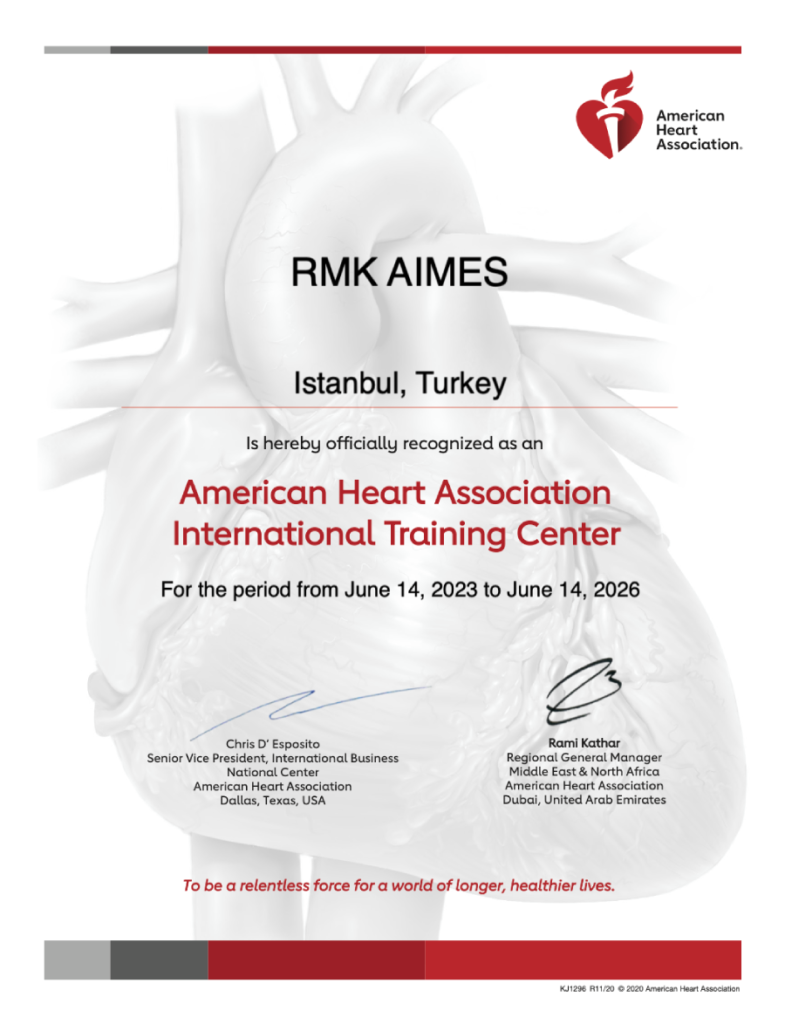
American Heart Association

Accredited by American Health Association (AHA)

The American Heart Association (AHA) is a nationwide voluntary health organization composed of science and lay volunteers and supported by professional staff. It offers many programs for cardiopulmonary resuscitation (CPR) and automated external defibrillator (AED), first aid and Emergency Cardiovascular Care (ECC) training,  to raise quality of care and improve outcomes from cardiac arrest and stroke.

Basic Life Support
(BLS)

The AHA’s BLS course trains participants to promptly recognize several life-threatening emergencies, give high-quality chest compressions, deliver appropriate ventilations, provide early use of an AED and relief of foreign-body airway obstruction (choking) for adults and infants.

Advanced Cardiovascular Life Support (ACLS)

The AHA’s ACLS course trains participants in lifesaving BLS skills, use of an AED, emphasizing the importance of continuous, high-quality CPR, advanced life support skills, and management of respiratory arrest, arrhythmias, acute coronary syndromes and stroke.

Pediatric Advanced Life Support (PALS)

The AHA’s PALS course trains participants in advanced life support skills for treating children and infants, including CPR, AED use, and management of respiratory emergencies, shock emergencies, and arrhythmias.

RMK AIMES Courses

Discover Dozens of Surgical & Non-Surgical Courses

RMK AIMES is proud to offer a wide variety of courses offered at our state-of-the art facility, or even remotely.

    RMK AIMES Courses

    Upcoming Events

    RMK AIMES is proud to offer a wide variety of courses offered at our state-of-the art facility, or even remotely.

    • June 22
      The course aims to give the participants the opportunity to practice and demonstrate proficiency in continuous high-quality CPR, high-performance team dynamics and communication, and recognition and intervention of cardiopulmonary arrest, acute dysrhythmia, stroke, and acute coronary syndromes. Students practice the application of these and other skills in simulated cases and will practice both team leader and team member roles. Goals To apply high-quality basic life support in adults Airway management Recognition of clinical signs of detoriation Prevention of arrest: Recognition and early management of peri-arrest rhythms such as symptomatic bradycardia and tachycardia Cardioversion and transcutaneous pacing High-performance team dynamics: cardiac arrest rhythms and post-cardiac arrest care management Approach, diagnosis, and intervention in acute coronary syndromes and acute stroke Extensive practice of team dynamics and communication during resuscitation Course Content Didactical lessons Interactive learning accompanied by videos Skill practices on task trainers and mannequins Simulated clinical scenarios Assessment of knowledge and skills practices   **At the end of the course American Heart Association (AHA) certificate will be awarded to the participants who successfully complete the course. Please contact with us for registration via info@aimes.org Cancellation Policy
      Unlimited Seats
    • July 19 @ 8:00 am
      SLICE at Johns Hopkins & RMK AIMES Collaborative Course Robotic Radical Prostatectomy on Hydrogel Models Dates: 19-20-21 July 2026, Sunday-Monday-Tuesday   Course Chairs Dr. Ahmed Ghazi Associate Professor of Urology, Director of Surgical Learning and Innovation Center of Excellence (SLICE), Director of Minimally Invasive & Robotic Surgery, The Johns Hopkins Hospital, Brady Urological Institute, Baltimore, Maryland, USA Dr. A. Erdem Canda Professor of Urology, Director of Rahmi M. Koç Academy of Interventional Medicine, Education & Simulation (RMK AIMES), Koç University Hospital Department of Urology, Istanbul, Türkiye   Day-1: Lectures & Video Presentations Day-2: Hands-on Training Using Hydrogel Prostate Models (2 trainees per model) Day-3: Live Case Observation In The Operating Room   Robotic Radical Prostatectomy Lectures & Video Presentations Include (Day-1: 19 July 2026, Sunday): Hydrogel Models for Robotic Urology Training Robotic Radical Prostatectomy with Hydrogel Models Posterior Approach: Seminal Vesicle & Vas Deference Dissection, Opening Denonvillier’s Fascia Anterior Approach & Bladder Neck Dissection Median Lobe Dissection & Bladder Neck Reconstruction NVB Sparing, Prostatic Pedicle Dissection & Completion of Prostatectomy Urethro-vesical Anastomosis with Posterior Reconstruction Extended Pelvic Lymph Node Dissection Low-Pressure Robotic Surgery   Please send us an email to info@aimes.org for details. Please click here to download the program.
      2 Seats Available
    • July 19 @ 8:00 am
      Management of Complications in Laparoscopic Urology & Laparoscopic Partial Nephrectomy Course 19-20-21 July 2026, Sunday-Monday-Tuesday   AIMS AND OBJECTIVES; Lectures and video presentations will be given about complications & management of laparoscopic urology complications. Performing a laparoscopic partial nephrectomy will also be covered. Hands-on training will include laparoscopy training boxes and on porcine models under anesthesia. COURSE CONTENT: Video presentations & lectures on complications & management of laparoscopic urology complications Hands-on training on laparoscopy training boxes & porcine models under anesthesia Hands-on training on porcine models under anesthesia (depending on time): 2 participants per porcine model – Performing port placement – Performing ureteral injury repair, uretero-neo-cystostomy, ureteroureterostomy – Performing bowel injury repair – Performing major vessel injury repair – Performing partial nephrectomy   Please send us an email to info@aimes.org for details. Please click here to download the program.
      $1,500.00
      12 Seats Available
    • July 19 @ 8:00 am
      1st South East Robotic Urology Surgeons (SERUS) Meeting 19th July 2026, Sunday   SERUS, which stands for South East Robotic Urology Surgeons, is a collective organization of robotic surgeons that was founded in 2024. Its primary objectives include exchanging expertise and information, fostering cooperation and camaraderie among its members as well as with other societies, conducting collaborative research, and organizing joint conferences and activities focused on advancements in robotic urology.   Please send us an email to info@aimes.org for details. Please click here to download the program.  
      $200.00
      50 Seats Available
    • July 19 @ 8:00 am
      Medtronic Hugo RAS Venue: RMK AIMES Surgical Training Center & Koç University Hospital, Istanbul, Türkiye Dates: 19-20-21 July 2026, Sunday-Monday-Tuesday   Content: Day-1: Lectures & Video Presentations Day-2: Hands-on Training Using Hydrogel Prostate Models (2 trainees per model) Day-3: Live Case Observation In The Operating Room Robotic Radical Prostatectomy Lectures & Video Presentations Include (Day-1: 19 July 2026, Sunday): Hydrogel Models for Robotic Urology Training Robotic Radical Prostatectomy with Hydrogel Models Posterior Approach: Seminal Vesicle & Vas Deference Dissection, Opening Denonvillier’s Fascia Anterior Approach & Bladder Neck Dissection Median Lobe Dissection & Bladder Neck Reconstruction NVB Sparing, Prostatic Pedicle Dissection & Completion of Prostatectomy Urethro-vesical Anastomosis with Posterior Reconstruction Extended Pelvic Lymph Node Dissection Low Pressure Robotic Surgery   Please send us an email to info@aimes.org for details. Please click here to download the program.
      Unlimited Seats
    • July 23
      The course aims to give the participants the opportunity to practice and demonstrate proficiency in continuous high-quality CPR, high-performance team dynamics and communication, and recognition and intervention of cardiopulmonary arrest, acute dysrhythmia, stroke, and acute coronary syndromes. Students practice the application of these and other skills in simulated cases and will practice both team leader and team member roles. Goals To apply high-quality basic life support in adults Airway management Recognition of clinical signs of detoriation Prevention of arrest: Recognition and early management of peri-arrest rhythms such as symptomatic bradycardia and tachycardia Cardioversion and transcutaneous pacing High-performance team dynamics: cardiac arrest rhythms and post-cardiac arrest care management Approach, diagnosis, and intervention in acute coronary syndromes and acute stroke Extensive practice of team dynamics and communication during resuscitation Course Content Didactical lessons Interactive learning accompanied by videos Skill practices on task trainers and mannequins Simulated clinical scenarios Assessment of knowledge and skills practices   **At the end of the course American Heart Association (AHA) certificate will be awarded to the participants who successfully complete the course. Please contact with us for registration via info@aimes.org Cancellation Policy
      Unlimited Seats
    • October 9 @ 8:00 am
      Koç University Hospital & University College London Hospital Collaborative Robotic Urology Courses & Observership Robotic NVB Sparing Radical Prostatectomy and Retzius Sparing Technique, Extended Pelvic Lymph Node Dissection & Robotic Radical Cystectomy with Intracorporeal Ileal Loop Formation Human Fresh Frozen Cadaver Course 9-10 October 2026, Friday & Saturday Venue: RMK AIMES* Training Center, Istanbul, Türkiye Please click here to download the program.   AIMS AND OBJECTIVES; Introducing components of the Da Vinci surgical robotic system, lectures and video presentations on robotic radical prostatectomy with NVB sparing and extended pelvic LN dissection, practicing with Da Vinci robotic simulators, and performing robotic radical prostatectomy with NVB sparing and extended pelvic LN dissection on human fresh frozen cadavers. Trainees will also perform robotic cystectomy with intracorporeal ileal loop formation. This course is not for beginners, and having some previous robotic surgery experience is suggested. COURSE CONTENT: • Lectures on components of the Da Vinci surgical robotic system • Lectures on robotic instruments used • Video presentations of robotic radical prostatectomy & robotic cystectomy with intracorporeal ileal loop procedures • Training on Da Vinci robotic simulators • Hands-on training on human fresh frozen cadavers: – Performing abdominal port placement – Identification of Douglas’ pouch – Dissecting seminal vesicles & vas deferences – Opening Denonvillier’s fascia – Taking down anterior abdominal peritoneum – Periprostatic fat dissection – Opening the endopelvic fascias – Deep dorsal vein suturing – Identification of bladder neck & sparing – Opening the bladder neck, dissection plane between the prostate & bladder – Performing NVB sparing – Performing prostatic pedicle dissection – Performing apex dissection & preserving a long urethra – Completing radical prostatectomy – Performing extended pelvic LN dissection – Performing urethro-vesical anastomosis – Performing major vessel injury repair – Learning how to use the 4th arm effectively – Interactive training with learning tips & tricks – Completion of robotic radical cystectomy – Performing ureteral dissection – Performing ileal loop formation – Performing side-to-side ileal anastomosis – Performing Wallace-type uretero-ileal anastomosis   PROGRAM (Hands-on cadaver courses include Da Vinci x or xi systems) 9 October 2026, Friday Morning: Arrival 14:00-16:00 Lectures & video presentations: – Introducing the Da Vinci surgical robotic system (principles, components, instruments, docking & undocking, emergency undocking) – Video presentations of step-by-step surgical techniques with tips & tricks of robotic radical prostatectomy & robotic cystectomy with intracorporeal ileal loop procedures 16:00-17:00 Hands-on training with Da Vinci robotic simulators 10 October 2026, Saturday 08:30-09:00 Welcome 09:00-12:00 PART 1 Performing robotic radical prostatectomy with NVB sparing and extended pelvic LN dissection on human fresh frozen cadavers 12:00-13:00 Lunch Break 13:00-16:30 PART 2 Performing robotic radical cystectomy with intracorporeal ileal loop formation on human fresh frozen cadavers 16:30 - 17:00 End of Course, Closing Remarks, and Presenting Certificates   FACULTY: (in alphabetical order) Dr. A.Erdem Canda - Professor of Urology, Koç University Hospital, Department of Urology, Director, RMK AIMES Training Center, Istanbul, TR Dr. M.Derya Balbay - Professor of Urology, Koç University Hospital, VKF American Hospital, Department of Urology, Istanbul, TR Dr. Derya Tilki - Professor of Urology, Martini-Klinik Prostate Cancer Center, University Hospital Hamburg-Eppendorf, Germany, Koç University Hospital, Visiting Faculty, Department of Urology, Istanbul, TR Dr. Mohammad Hajiha, Assistant Professor, Department of Urology, Emory University School of Medicine, USA Dr. Mutlu Ateş, Professor of Urology, Koç Healthcare, Anatolia Hospital, Lara Department of Urology, Antalya, TR Dr. Tarık Esen, Professor of Urology, Koç University Hospital, VKF American Hospital Department of Urology, Istanbul, TR Dr. Yakup Kordan, Professor of Urology, Koç University Hospital School of Medicine, Chairman, Department of Urology, Istanbul, TR Mr. Zafer Tandogdu, FRCS (Urol) Consultant Urologist and Robotic Prostate Cancer Surgeon, University College London Hospitals (UCLH), Associate Professor of Urology, London, UK   Please send us an email to info@aimes.org for details.  
      $2,000.00 - $2,500.00
      4 Seats Available

    Take a Peek

    Encompassing over 5 floors and more than 6,000 m2, AIMES is an educational hub, operating out of the vibrant and ancient city of Istanbul.

    RMK AIMES: Special Programs

    Excelling in Medicine.

    RMK AIMES offers a suite of programs, certifications and education centered around various disciplines and topics, explore some of them for yourself:

    Brought to You by a Connected Network

    As Koç Healthcare, we have determined a clinical road map, guidance and algorithms to provide transparent and integrated healthcare services at a standardized level of quality to all of our patients. Our medical and administrative systems are constantly measured and evaluated in order to ensure continuous development.